Alanya Castle
Historical Information:
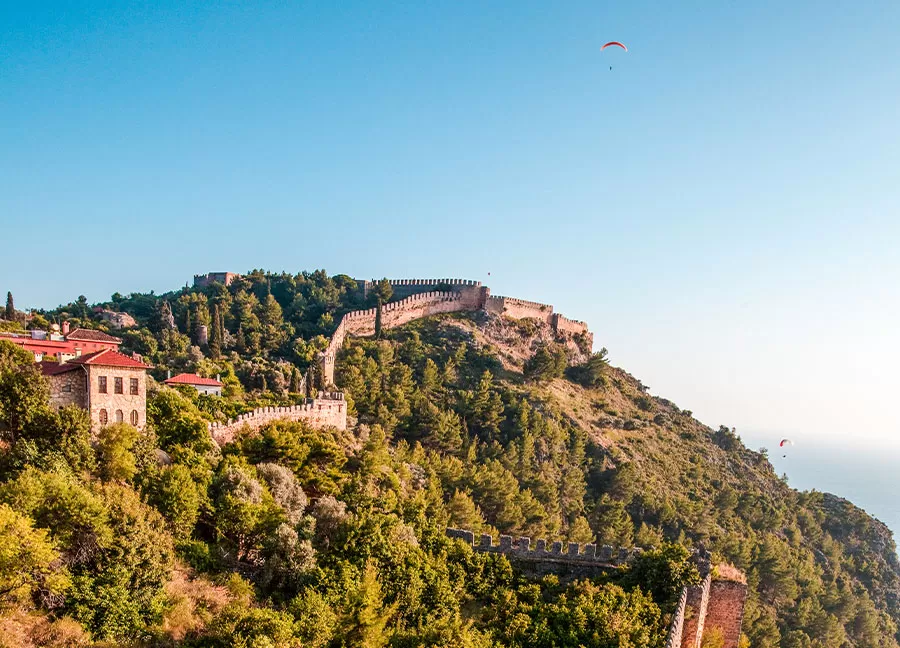
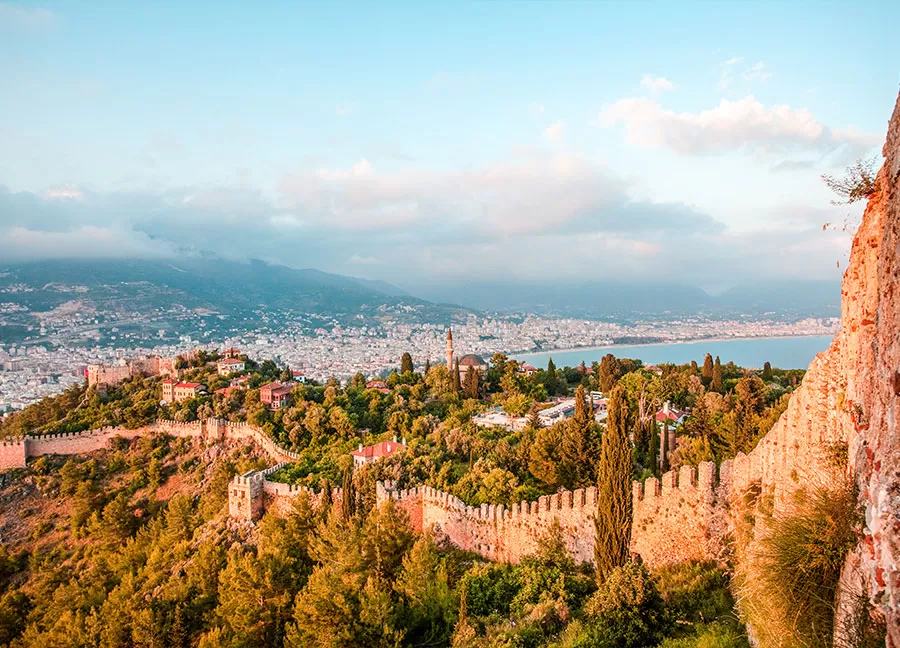
Located at the top of the historical peninsula and surrounded by the city walls, İçkale is significant, with archaeological excavations dating from antiquity. This area is also surrounded by ramparts and was constructed as an interior castle. Findings unearthed in the excavations conducted in the interior fortress area reveal that this historical site in the city's acropolis was used during the Roman, Byzantine, Seljuk and Ottoman periods, starting from the third century BC. During the excavations, a bronze coin of Tryphon (160-138 BC), found at the Gate of İçkale, is believed to be among the oldest written documents.
Coins discovered in the excavations attributed to the periods of Justinus II (565-578), Constans II (641-668) and Leo IV (886-912) indicate that the settlement of the city continued during the Byzantine period and between the 6th and 10th centuries. At the site of a planned, central domed triconch (three-leaf clover) church, a three-nave basilica dating from the 6th century was found below; this was demolished by the 10th century and, rather than the church, a necropolis was constructed. The current church was built at the end of the 12th century.
Following the conquest of the city in 1221 and taking advantage of the remains of the older structures, the reconstruction of İçkale was reconsidered to establish the Seljuk Palace, the residence of the Seljuk Sultan Aladdin Keykubad I. Keykubad’s palace consisted of a complex comprising a front courtyard surrounded by two-level rooms, a ceremonial veranda where the throne was located, rooms reserved for the Sultan’s quarters, a pinnacle and a harem. The excavations indicate that the palace was richly decorated, with mosaic floors and wall frescos.
The other buildings in İçkale include the monumental fortress gate, the two-level vaulted galleries, two-storey navigational pavilions and other important structures remaining from the Seljuk Period. This area was transformed into a 'Cistern Castle' in the Ottoman era, when settlement in the upper part of the city required a need for water.
How Can I Go?:
Public transport : There is a minibus stop on the coastal side of the main road, and an Alanya bus passes every 10 minutes. You can get off at the last stop, or you can ask the minibus driver where you are going and ask him to drop you off at the nearest place.
You can also arrange a taxi at the reception or rent a car.
Extra Information:
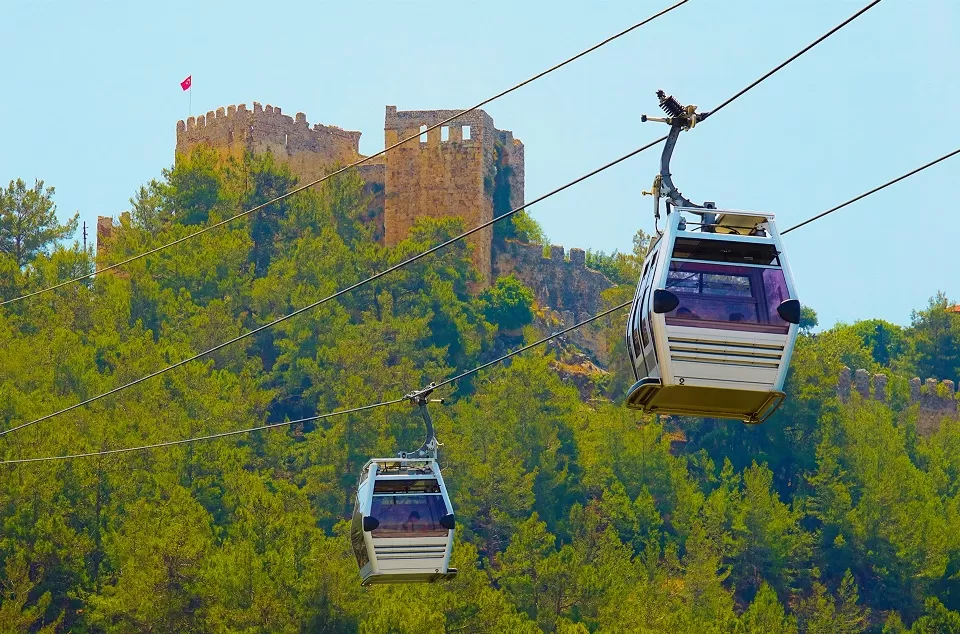
It is Possible to Use the Cable Car for Alanya Castle, For Price and Detailed Information ALANYA TELEFERİK A.Ş. You can visit website.
Damlataş Cave
Historical Information:
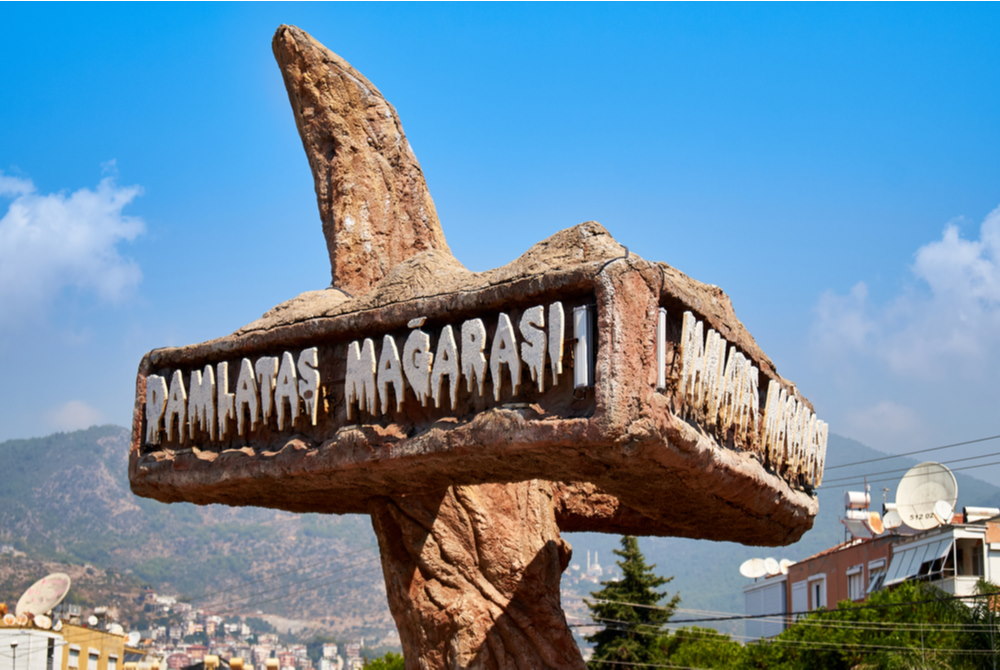
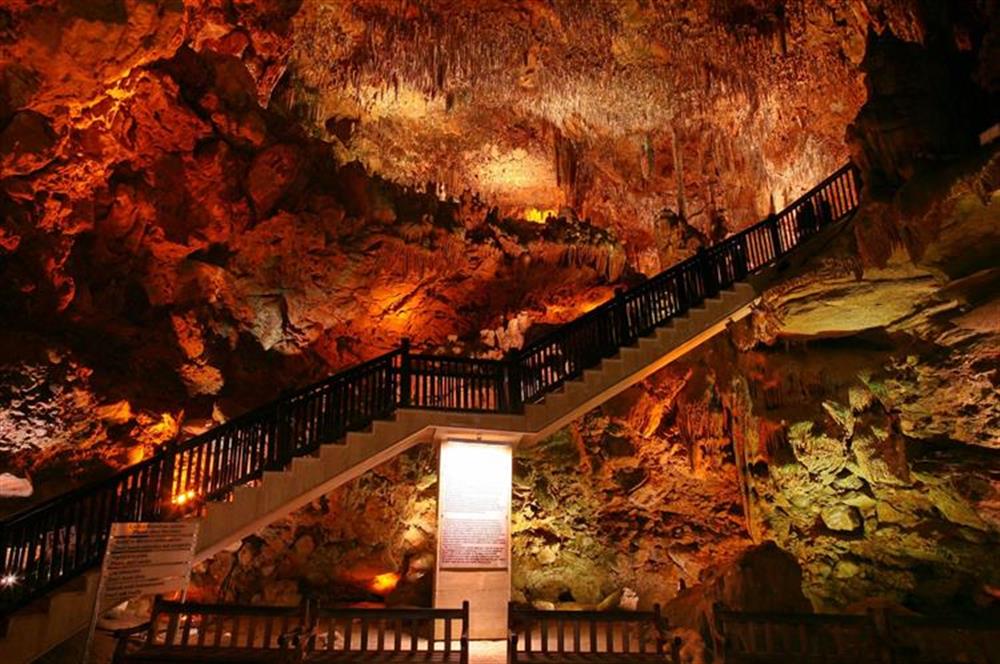
Damlataş Cave is a famous natural wonder located on the western coast of the historical Alanya Castle peninsula in Alanya, Turkey. Discovered by chance in 1948 during the construction of Alanya Harbor, it was the first cave in Turkey to be opened to tourism.
Visiting Information
Opening Hours: Generally open daily from 09:00 to 19:00.
Tickets: Entry fees are managed by the Alanya Municipality, meaning the standard Turkish Museum Pass (Müzekart) is typically not valid.
Accessibility: The cave is relatively small and can be reached on foot from many downtown Alanya locations.
How Can I Go?:
Public transport : There is a minibus stop on the coastal side of the main road, and an Alanya bus passes every 10 minutes. You can get off at the last stop, or you can ask the minibus driver where you are going and ask him to drop you off at the nearest place.
You can also arrange a taxi at the reception or rent a car.
Extra Information:
Healing Atmosphere: The cave is renowned for its constant temperature (22.3°C) and high humidity (95%), which are believed to provide therapeutic benefits for asthma and COPD patients.
Ancient Formations: It features stunning stalactites and stalagmites estimated to be around 15,000 years old.
Sapadere Canyon
Historical Information:
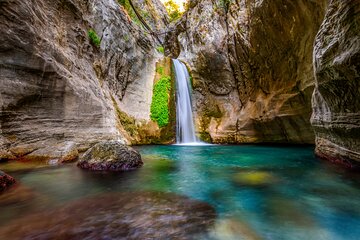
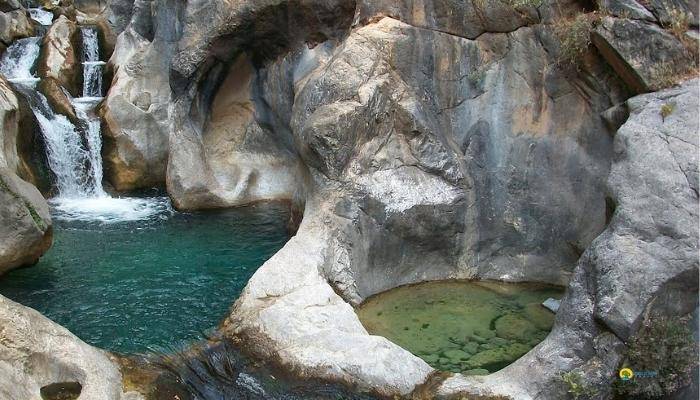
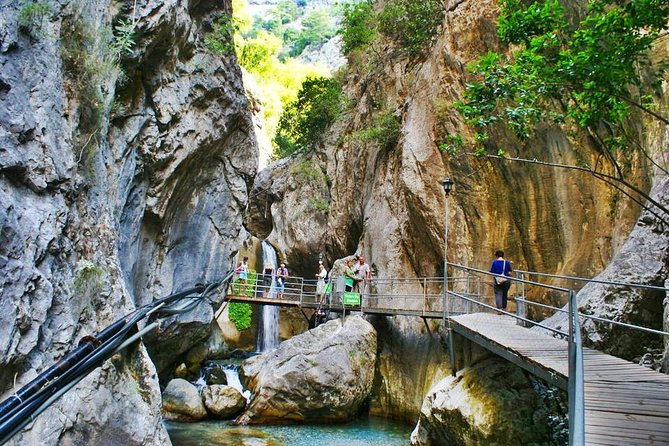
Sapadere Canyon is a natural wonder located in the Taurus Mountains, approximately 40 km east of Alanya. Opened to tourism in 2008, it features a 750-meter-long wooden walkway that allows visitors to explore dramatic cliffs, numerous waterfalls, and crystal-clear mountain streams. It is a popular day-trip destination for those looking to escape the coastal heat, as the canyon remains naturally cool even during the peak of summer.
- Entrance Fees: Approximately ~250 TL for the canyon and an additional ~250 TL for the Dwarf Cave.
- Opening Hours: Generally open daily from 8:00 AM to 6:00 PM.
- Best Time to Visit: Late spring to early autumn. Arriving early in the morning is recommended to avoid the crowds that typically arrive via tour buses later in the day.
- Facilities: The entrance area includes a parking lot, restrooms, a café, and a restaurant serving traditional Turkish cuisine like gözleme.
How Can I Go?:
The most convenient way to reach Sapadere Canyon from hotel is by joining a guided tour (You can ask a representative of your travel agency), as there is no direct public transportation to the canyon entrance.
Or you can arrange a taxi at the reception or rent a car.
Extra Information:
- The Canyon Walk: A well-maintained wooden pathway winds through the gorge, making the 750-meter hike accessible for most ages.
- Swimming: Natural pools along the path are open for swimming. Note that the water is sourced from mountain snowmelt and remains extremely cold (around 16°C) year-round.
- Waterfalls: The trail culminates in a spectacular large waterfall at the far end of the canyon.
- Dwarf Cave (Cüceler Mağarası): Often visited as part of a canyon tour, this nearby cave is famous for its colorful stalactites and stalagmites.
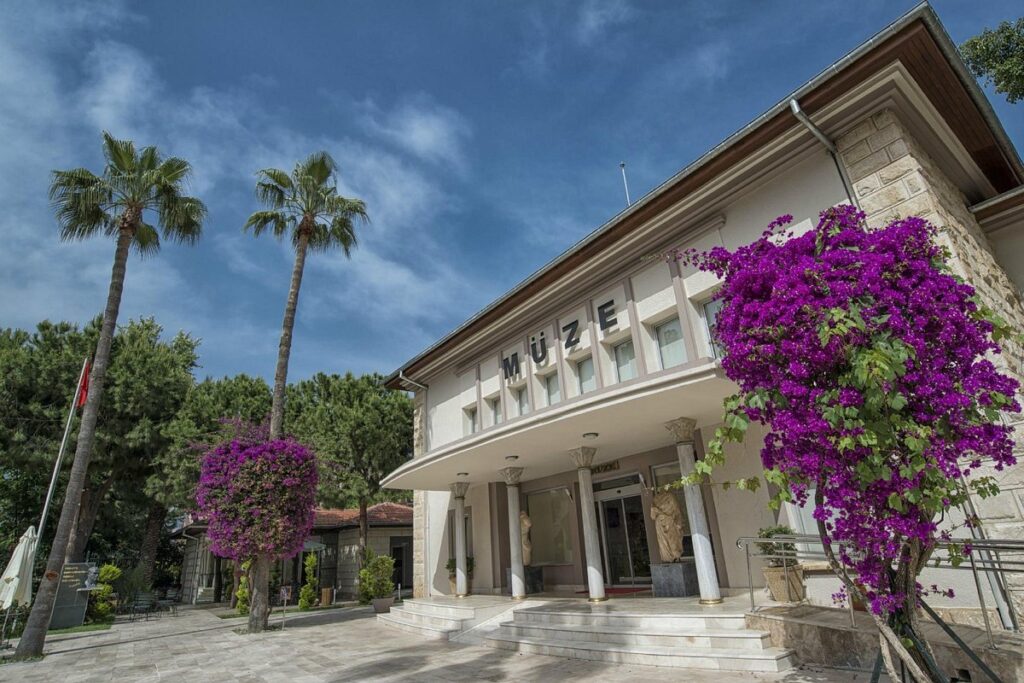
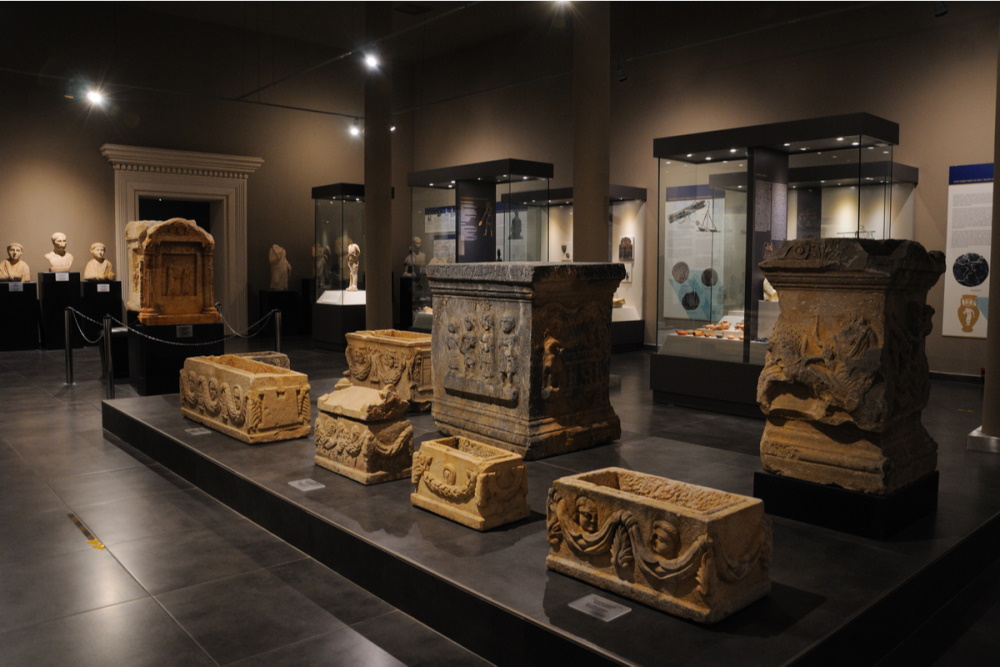
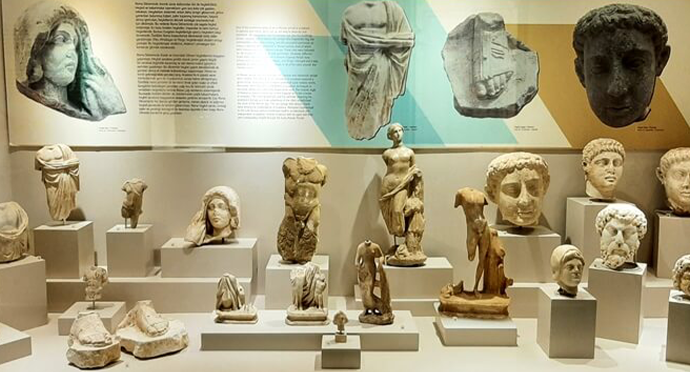
The Alanya Archaeological Museum
Historical Information:
The Alanya Archaeological Museum (Alanya Müzesi) is a centrally located cultural landmark in Alanya, Turkey, housing artifacts that span over 3,000 years of history. Opened in 1967 and fully renovated in 2012, the museum is best known for its rare bronze statue of Heracles and its diverse collection ranging from the Bronze Age to the Ottoman era.
How Can I Go?:
Public transport : There is a minibus stop on the coastal side of the main road, and an Alanya bus passes every 10 minutes. You can get off at the last stop, or you can ask the minibus driver where you are going and ask him to drop you off at the nearest place.
You can also arrange a taxi at the reception or rent a car.
Extra Information:
- The Statue of Heracles: A 52-centimeter-high, exceptionally well-preserved bronze statue from the 2nd century AD, displayed in its own dedicated hall.
- Ship and Maritime Department: Features maritime artifacts like ancient ship remains, nautical tools, and amphorae found in the Mediterranean.
- Outdoor Garden: A tranquil open-air gallery containing Roman-era ossuaries, sarcophagi, Islamic gravestones, and ancient column capitals, where peacocks are known to roam.
- Chronological Galleries: Indoor halls follow a timeline from ancient Anatolian civilizations through the Hellenistic, Roman, Byzantine, Seljuk, and Ottoman periods.
- Special Collections: Notable items include a Phoenician stone inscription from 625 BC (the oldest in the museum) and a rich collection of ancient coins.
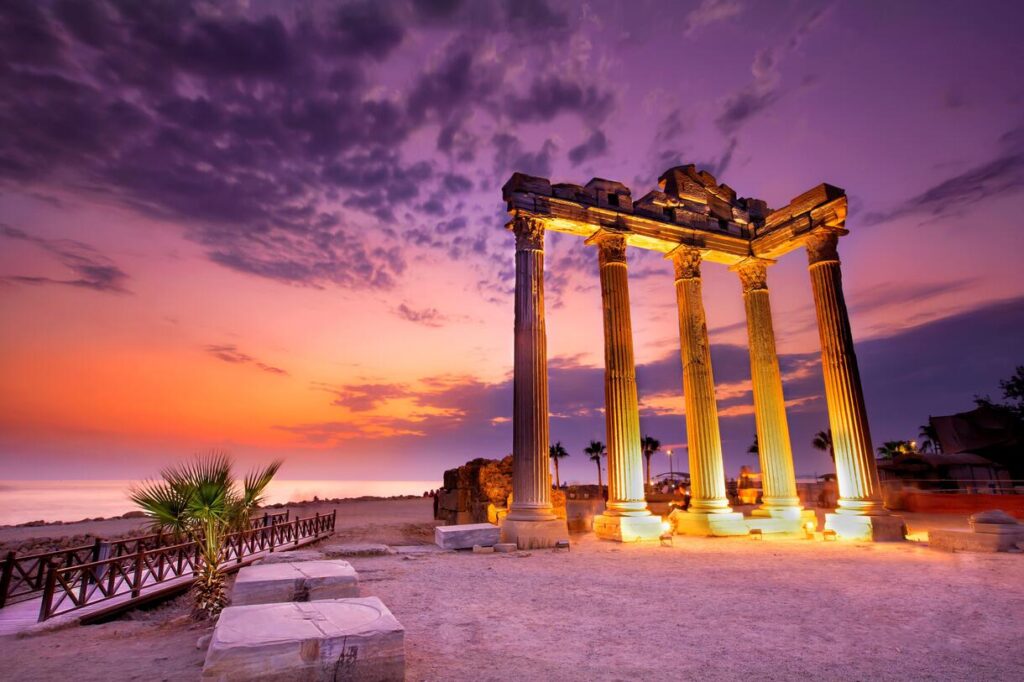
Side
Historical Information:
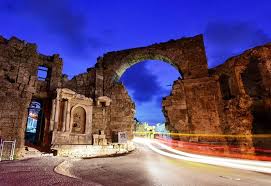
Side is a prominent resort town and ancient port city on the southern Mediterranean coast of Turkey, located about 75 km east of Antalya. It is famous for its unique blend of well-preserved Greco-Roman ruins and modern holiday amenities situated on a small peninsula.
- Temple of Apollo: Iconic white marble columns standing at the edge of the sea, particularly stunning at sunset.
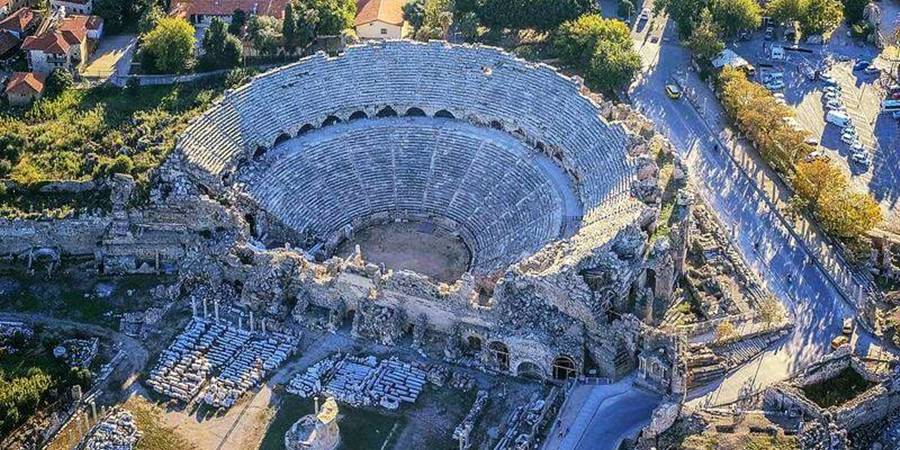
- Side Antique Theater: A massive 2nd-century amphitheater that once seated 15,000 people.
- Side Museum: Housed in a restored Roman bath complex, featuring local archaeological finds.
- Old Town & Harbour: A lively area with narrow streets, waterfront dining, and boutique shops.
How Can I Go?:
By Bus (Dolmuş): There is no direct bus to Side. You must first take a bus from Payallar to the Manavgat Bus Station (Otogar). From there, transfer to a local Side-bound dolmuş, which runs every few minutes and takes about 15 minutes to reach the Side Bus Station near the ancient city entrance.Or you can also arrange a taxi at the reception or rent a car.
Location: Part of the Manavgat district in Antalya Province.
Extra Information:
Name Meaning: The name "Side" is believed to mean "pomegranate" in the ancient Luwian language.
Aspendos
Historical Information:
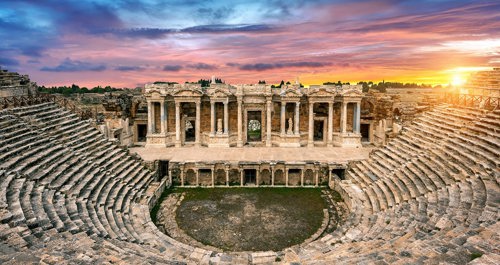
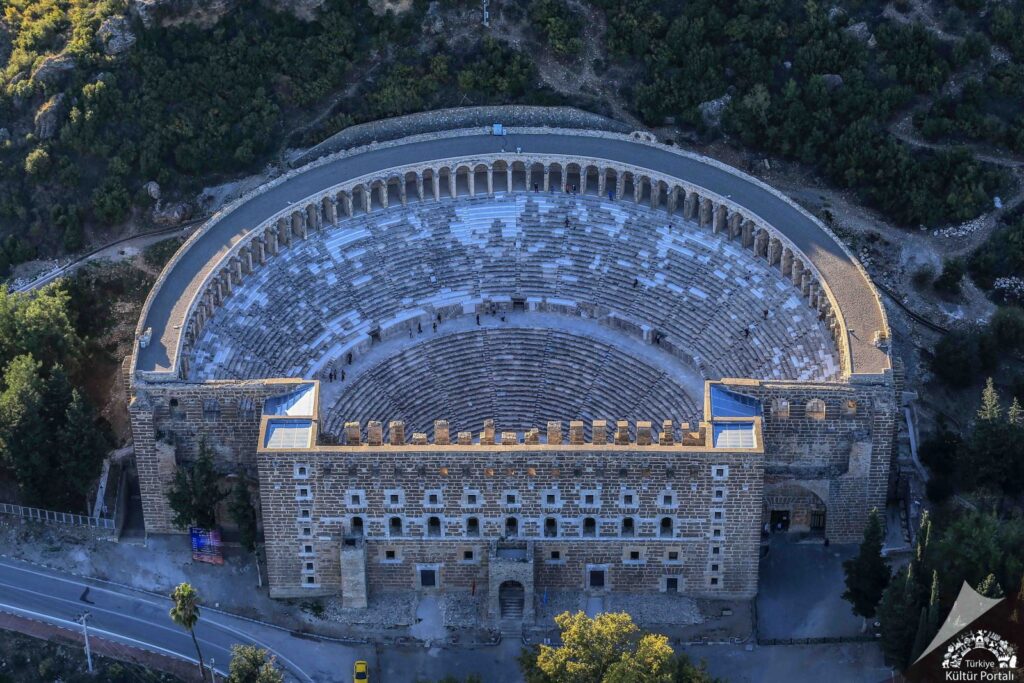
Aspendos is an ancient Greco-Roman city located in the Serik district of Antalya, Turkey, approximately 45 km east of the city center. It is world-renowned for its Roman Theatre, which is widely considered the best-preserved ancient theatre in the world.
- The Ancient Theatre: Built in the 2nd century AD during the reign of Emperor Marcus Aurelius by the architect Zenon. It features exceptional acoustics—where a whisper on stage can be heard in the top rows—and has a capacity of roughly 15,000 spectators.
- The Aqueducts: A 1 km long series of arches and siphons that brought water from the Taurus Mountains. It is a rare surviving example of ancient hydraulic engineering and is on the UNESCO Tentative List.
- The Acropolis & Upper City: Located on the hill behind the theatre, the ruins include a Basilica, an Agora (market square), a Bouleuterion (council chamber), and an ancient Stadium.
- Seljuk Bridge: A restored 13th-century stone bridge across the Köprüçay River (ancient Eurymedon), built on the foundations of an earlier Roman bridge.
How Can I Go?:
The most efficient route is via the D400 highway heading west toward Antalya.
You can arrange a taxi at the reception or rent a car.
Extra Information:
- Hours: Typically open daily from 08:00 to 19:00 in summer (April–October) and until 18:00 in winter.
- Fees: Entry costs approximately 15 euros for foreigners; MuseumPass Turkey is accepted.
- Events: The theatre still hosts the Aspendos International Opera and Ballet Festival every summer, offering a unique opportunity to experience live performances in a 2,000-year-old venue.